June 1935
Hastings Returns to London
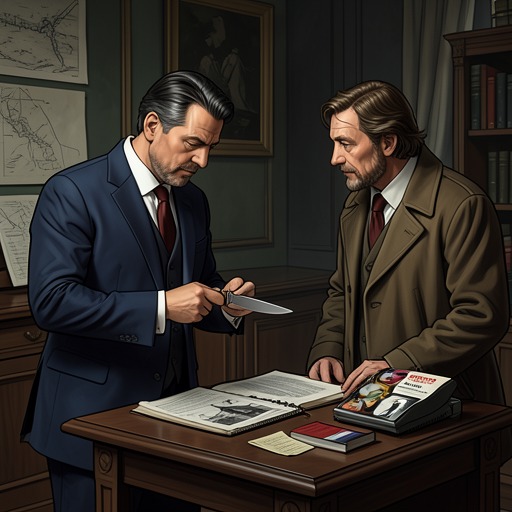
After a difficult period managing a ranch in South America, [Arthur Hastings](entity:character-recall-character-arthur-hastings-24d362cbed89) returned to England for about six months, while his wife remained behind. One of his first visits was to [Hercule Poirot](entity:character-recall-character-hercule-poirot-16ed38cee024), now living in the geometrically pleasing [Whitehaven Mansions](entity:location-recall-location-whitehaven-mansions-936cf673f0a9).
Their reunion re-established the partnership that would carry the investigation. Poirot joked about his hair dye and his repeated, supposedly final retirements, then hoped that Hastings’s arrival would bring a crime worthy of his attention.
June 1935, before June 21
The First Anonymous Challenge
Poirot showed Hastings a printed letter addressed to “Mr [Hercule Poirot](entity:character-recall-character-hercule-poirot-16ed38cee024).” Its writer mocked British police and challenged Poirot to prove his cleverness, warning him to watch [Andover](entity:location-recall-location-andover-52a179db93b6) on the 21st of the month. The sender signed himself [A B C](entity:expression-recall-expression-a-b-c-259123183ddf).
Hastings dismissed the message as a drunken hoax, but Poirot felt that something about it was wrong. He had shown it to [Chief Inspector Japp](entity:character-recall-character-chief-inspector-jap-21e8ddbbaea1), who also treated it lightly; Poirot nevertheless feared that the threat might conceal a murder.
June 20, 1935
Cust Prepares His Journey
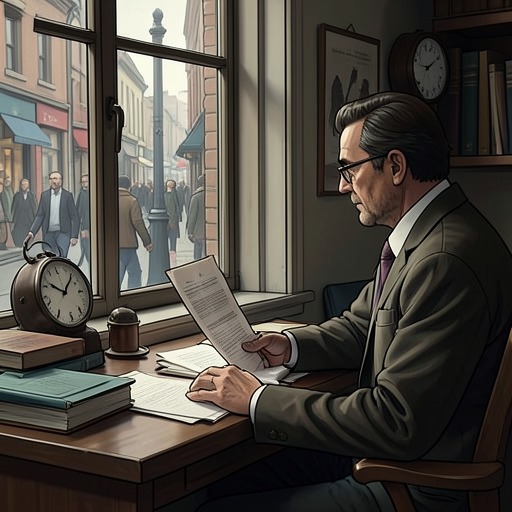
[Alexander Bonaparte Cust](entity:character-recall-character-alexander-bonaparte-190efc547aaf) sat in a shabby room studying a railway guide and a typed list of names. He marked one of the first entries, then prepared to travel, a brief glimpse of the quiet, near-sighted man whose movements would later become central to the case.
The scene established an unseen parallel to Poirot’s investigation: while the detective waited for the threatened date, Cust was already following a list and setting the first stage of a plan he did not fully understand.
June 21, 1935
Japp Reports Andover Quiet
The morning after the date in the letter, [Chief Inspector Japp](entity:character-recall-character-chief-inspector-jap-21e8ddbbaea1) visited Poirot and Hastings. He reported that [Andover](entity:location-recall-location-andover-52a179db93b6) had seen no serious crime, only minor disorder, and teased Poirot for taking the anonymous warning seriously.
Poirot admitted that he might have mistaken an ordinary foolishness for danger. Yet when the telephone rang later, Japp had a different message: [Alice Ascher](entity:character-recall-character-alice-ascher-7c3a05a9a6ed), a shopkeeper in Andover, had been murdered. The warning had not been a hoax after all.
June 21, 1935, about 5:30–6:05 p.m.
The Andover Murder
Police Constable Dover found [Alice Ascher](entity:character-recall-character-alice-ascher-7c3a05a9a6ed) dead behind the counter of her tobacco and newspaper shop. She had been struck from behind with a heavy blow, probably while reaching for cigarettes; the shop’s money remained untouched. Witnesses placed one customer there at 5:30 and another shortly after six.
Inspector Glen explained that Ascher’s estranged husband, Franz, drank heavily and had repeatedly threatened her. The obvious domestic explanation made him a prime suspect, but the anonymous warning naming [Andover](entity:location-recall-location-andover-52a179db93b6) and the 21st left the police uneasy about coincidence.
June 22, 1935, after the murder
Franz Ascher Is Detained
Police found Franz Ascher hiding in a railway truck and brought him in for questioning. He denied killing his wife, alternately blustering and pleading, and claimed that he had spent the evening drinking with acquaintances. The inspector considered those companions unreliable witnesses but could not yet rule out the husband.
The absence of robbery and Ascher’s history of threats pointed toward him, while the letter suggested an unknown killer. The contrast between the apparent domestic motive and the promised alphabetical pattern became the investigation’s first major tension.
June 22, 1935, during the initial inquiry
The Railway Guide Appears
Inspector Glen mentioned that a large [A.B.C. railway guide](entity:object-recall-object-a-b-c-railway-guide-6d7f04fc18ec) had been found open and face down on the shop counter. It did not belong to the shop’s usual stock; someone had apparently been consulting trains from [Andover](entity:location-recall-location-andover-52a179db93b6), though it might have been left by a customer.
Poirot immediately recognized the possible link between the object and the signature on the threatening letter. The guide transformed an apparently ordinary murder into a possible first act in a deliberate series.
June 22, 1935, afternoon
The Niece’s Account
Poirot and Hastings visited [Mary Drower](entity:character-recall-character-mary-drower-4925b3711c93), [Alice Ascher](entity:character-recall-character-alice-ascher-7c3a05a9a6ed)’s niece, at the house where she worked. Mary described her aunt’s difficult life with Franz and the threats he had made, but said that Alice had not been afraid of him and could stand up to him. She knew of no enemies or suspicious letters.
Mary explained that Alice had taken her in after her mother died and had helped her throughout her life. She planned to leave her country position and return to [London](entity:location-recall-location-london-420923d4a60a); Poirot asked her to keep his card, sensing that she might be useful if the case developed.
June 22, 1935, about 5:30 p.m.
Poirot Reconstructs the Shop
Poirot took Hastings to the crime scene at the same hour [Alice Ascher](entity:character-recall-character-alice-ascher-7c3a05a9a6ed) had been attacked, hoping to recover something of the previous evening’s conditions. The crowd outside the shuttered shop made the street unlike its normal busy, working-hour self. Inside, the counter was cluttered with confused fingerprints, and the railway guide had been left open to the trains from [Andover](entity:location-recall-location-andover-52a179db93b6).
The body’s position suggested that Alice had been serving a customer with her back turned, rather than facing an abusive husband across the counter. Poirot treated this as a point against Franz Ascher and continued to search for the stranger who had used the ordinary routine of the shop as cover.
June 22, 1935, evening
The Street Interviews
Across the street, Poirot deliberately misled a greengrocer’s family with a fanciful description of a supposed foreign suspect. Hastings contradicted him with a second invented description. Their conflicting claims loosened the witnesses’ tongues and showed that the busy street offered many passers-by but little reliable observation.
Poirot then posed as a newspaper representative to question Mrs Fowler, Alice’s neighbour. She repeated the popular belief that Franz had killed Alice, denied seeing an A.B.C. guide, and recalled salesmen who came door to door offering goods, including stockings—a detail whose significance would emerge much later.
June 22, 1935, evening
Two Witnesses Are Questioned
Poirot interviewed James Partridge, a precise bank clerk who had bought tobacco from Alice at 5:30, and Albert Riddell, a hostile railway worker who entered the shop shortly after six. Partridge insisted that Alice had seemed normal. Riddell said the door had been closed and that he had seen no body behind the counter.
Both men had been in the shop during the likely time of death, so Poirot would not simply dismiss them. Yet their accounts offered no clear description of a departing stranger, leaving the investigator with the railway guide and the anonymous challenge as the most suggestive clues.
June 22, 1935, on the train from Andover
Poirot Reads the Clue
On the journey back, Poirot told Hastings that the murderer had deliberately left the railway guide. Because the weather was warm, the lack of fingerprints suggested not gloves but a carefully wiped object. An innocent customer would have left prints; the killer had planted the guide for a purpose.
Poirot began to infer a personality behind the evidence: someone who printed neatly, chose good paper, and craved attention, perhaps compensating for a lifelong sense of inferiority. He did not yet know the killer’s identity or even whether the writer was a man or a woman, but he believed the crimes could reveal the mind behind them.
July 25, 1935, evening
The Bexhill Warning
After a quiet period, a second printed letter arrived at Poirot’s rooms. Its writer taunted him about [Andover](entity:location-recall-location-andover-52a179db93b6), called the murder the first game, and named [Bexhill-on-Sea](entity:location-recall-location-bexhill-on-sea-d574eccd4e5d) for the 25th. Poirot told Hastings that another killing was intended, not merely hinted at.
At a conference of police officials and [Dr Thompson](entity:character-recall-character-dr-thompson-ff409a982505), Poirot suggested that the next victim’s surname might begin with B, though he cautioned that the pattern could be coincidence. The authorities planned to watch likely B-named shopkeepers and strangers, but the scale of the summer crowds made prevention difficult.
July 25, 1935, early morning
Betty Barnard Is Found
Poirot woke Hastings with news that a young woman’s body had been found on the beach at [Bexhill](entity:location-recall-location-4de26abfb0f2). The victim was identified as [Elizabeth Barnard](entity:character-recall-character-elizabeth-barnard-cf2501601ea5), a waitress at the [Ginger Cat café](entity:location-recall-location-ginger-cat-caf-d0e516946ef8). A railway guide opened to Bexhill had been placed under her body, making the connection to the [Andover](entity:location-recall-location-andover-52a179db93b6) murder unmistakable.
The discovery confirmed the second warning and made the case a public emergency. [Inspector Crome](entity:character-recall-character-inspector-crome-8637fb4b2f46) joined Poirot and Hastings on the journey to Bexhill, where police began tracing the dead woman’s movements and trying to identify the man who had accompanied her.
July 25, 1935, morning
The Café Investigation
At the [Ginger Cat café](entity:location-recall-location-ginger-cat-caf-d0e516946ef8), manageress Miss Merrion said [Elizabeth Barnard](entity:character-recall-character-elizabeth-barnard-cf2501601ea5) had been a competent waitress but kept her private life to herself. [Milly Higley](entity:character-recall-character-milly-higley-3ca9ceb9a3e5), a more talkative colleague, described Betty as attractive, somewhat reserved at work, and accustomed to meeting a handsome young man who worked at an estate agency.
Higley thought Betty might have been meeting that man on the night she died and remembered that she had worn a new white dress. No one at the café knew her exact plans, so the inquiry shifted from her workplace to her home and the people closest to her.
July 25, 1935, morning
Megan Rejects the Newspaper Story
At the Barnards’ bungalow, Poirot and the police learned that Elizabeth’s family had gone to bed early and did not know she had failed to return. Her sister Megan arrived from [London](entity:location-recall-location-london-420923d4a60a) carrying a suitcase and initially insisted that Betty had been a bright girl with no men friends.
When Poirot asked for the truth rather than the charitable account usually given of the dead, Megan called her sister an unmitigated little ass. Her bluntness opened a more useful account of Betty’s character and of the jealousy that had troubled her relationship with [Donald Fraser](entity:character-recall-character-donald-fraser-df7df8ab4341).
July 25, 1935, morning
Megan Describes Betty’s Love Life
Megan explained that Betty enjoyed attention, compliments, dancing, and occasional outings with men, though she was not, in Megan’s view, sexually reckless. [Donald Fraser](entity:character-recall-character-donald-fraser-df7df8ab4341) was quiet and deeply devoted, but his jealousy could become frightening when Betty lied about seeing other men.
One quarrel had followed Betty’s secret trip to Eastbourne with a married man. Donald had threatened that one day he would commit murder. Megan feared that the old quarrel could make him a suspect, even though she did not believe he had killed her sister.
July 25, 1935, morning
Fraser Explains His Night
[Donald Fraser](entity:character-recall-character-donald-fraser-df7df8ab4341) arrived at the Barnards’ house in shock. He admitted that Betty had told him she was going to St Leonards with a girl friend, and that he had suspected she was lying. He had gone to the café, considered watching her leave, then travelled to St Leonards and Hastings looking for her.
Fraser returned home after midnight without finding Betty. His jealousy and the earlier threat made his account important, but Poirot insisted that the true facts were necessary to identify the unknown killer. After the questioning began, Poirot remarked to Hastings that the murderer had shown “amazing magnanimity,” since his warnings prevented suspicion from settling solely on Ascher or Fraser.
After July 25, 1935
The Police Debate Publicity
At a conference, officials debated whether to publicize the anonymous letters and the connection between the murders. [Inspector Crome](entity:character-recall-character-inspector-crome-8637fb4b2f46) argued that publicity would satisfy the killer’s craving for notoriety; [Dr Thompson](entity:character-recall-character-dr-thompson-ff409a982505) warned that withholding it might provoke another crime, while public attention might do the same.
Poirot agreed that either course could lead to another murder. He argued that the deeper task was to discover why the killer selected these victims and why he challenged Poirot in particular. The group could identify a pattern, but the motive behind it remained elusive.
July 30, 1935, 10 p.m.
The Churston Letter Arrives Late
A third letter arrived on the evening of July 30, announcing a murder at [Churston](entity:location-recall-location-churston-82f31899318d) that same day. The envelope had been misaddressed to Whitehorse Mansions instead of Poirot’s [Whitehaven Mansions](entity:location-recall-location-whitehaven-mansions-936cf673f0a9) and had reached him only after a delay. Poirot and Hastings realized that the warning had come too late for the police to protect anyone.
They hurried to contact [Scotland Yard](entity:organization-recall-organization-scotland-yard-598725f8a130) and travelled overnight toward Devon. The address error initially looked like chance, but it would later prove central to the killer’s larger design.
July 30, 1935, evening
Sir Carmichael Clarke Is Murdered
As Poirot, Hastings, and Crome travelled toward [Churston](entity:location-recall-location-churston-82f31899318d), the police reported that [Sir Carmichael Clarke](entity:character-recall-character-sir-carmichael-clar-e8670f21f1ec) had been found dead with his head smashed in. An [A.B.C. railway guide](entity:object-recall-object-a-b-c-railway-guide-6d7f04fc18ec) had been placed on his body. He was a wealthy retired throat specialist and collector of Chinese art, living with his gravely ill wife near the Devon coast.
His murder made the third announced killing and promised a major newspaper sensation. Poirot recognized that the crime was a departure from the intimate household murders he and Hastings had usually investigated: this appeared to be impersonal murder by an outsider.
July 31, 1935, morning
The Household at Combeside
At [Combeside](entity:location-recall-location-combeside-693a1bf14775), Sir Carmichael’s brother [Franklin Clarke](entity:character-recall-character-franklin-clarke-c4c960fb7119) received the investigators and described his brother’s nightly walks. He said the area was crowded with summer visitors, making a stranger difficult to notice, and admitted that Sir Carmichael’s wife was dying of cancer. Franklin acknowledged that he would have suspected suicide if his brother had been found shot beside a cliff.
The secretary [Thora Grey](entity:character-recall-character-thora-grey-22f2a330cc57) had handled Sir Carmichael’s correspondence and reported no threatening letters or suspicious visitors. On the route of the nightly walk, she and Hastings spoke about the shock of the death. Thora wondered aloud where the murderer was now and said the next murder had to be stopped.
After the Churston murder, summer 1935
Cust Reads the Headlines
In a chapter outside Hastings’s personal narrative, Cust left a [Torquay](entity:location-recall-location-torquay-7e40a599d4da) cinema and read the newspaper accounts of the [Churston](entity:location-recall-location-churston-82f31899318d) murder. He trembled as strangers discussed the possibility that the murderer might be a seemingly ordinary man, and he admitted that his wartime head wound had unsettled him.
The news and the public speculation intensified the impression that Cust might be involved, though he remained unnoticed among the crowds. The scene showed how the public’s fascination with a supposed homicidal maniac was beginning to reshape the life of the quiet salesman.
August 1935
A Public Hunt Begins
The [Churston](entity:location-recall-location-churston-82f31899318d) murder propelled the case into the national press. Newspapers published the letters and images, offered speculative clues, and printed interviews that distorted Poirot’s words. [Scotland Yard](entity:organization-recall-organization-scotland-yard-598725f8a130) and local police questioned hotels, lodging houses, transport workers, stationers, and scores of people who might have seen a suspicious stranger.
Poirot seemed inactive to Hastings, explaining that routine inquiries belonged to the police while he studied the killer’s mind. He believed another murder was likely and hoped to gather details by talking repeatedly with the victims’ relatives and acquaintances, since people often overlook small facts when first questioned.
August 1935
The Special Legion Forms
[Franklin Clarke](entity:character-recall-character-franklin-clarke-c4c960fb7119) proposed a paid group of relatives and friends of the victims, organized under Poirot, to compare memories and watch for clues at the next crime scene. He volunteered to fund the effort and named himself, [Megan Barnard](entity:character-recall-character-megan-barnard-2807c66b64df), [Donald Fraser](entity:character-recall-character-donald-fraser-df7df8ab4341), [Mary Drower](entity:character-recall-character-mary-drower-4925b3711c93), and [Thora Grey](entity:character-recall-character-thora-grey-22f2a330cc57) among its members.
Poirot welcomed the plan because conversation might surface details that formal questioning had missed. The gathering also brought together people from three separate tragedies, creating new sympathies and tensions alongside the investigation.
August 1935, first meeting
Poirot Sets the Legion Talking
At the first meeting, Poirot described the killer as a cunning, apparently ordinary person who must have reconnoitred each location before striking. He argued that someone in the group might know a useful fact without realizing its importance and urged them to reconstruct their memories.
The members recalled fragments: Franklin remembered people and incidents around [Churston](entity:location-recall-location-churston-82f31899318d); Megan remembered Betty discussing clothes, money, and her dislike of [Milly Higley](entity:character-recall-character-milly-higley-3ca9ceb9a3e5); Mary described a recent letter from her aunt. Poirot also suggested that Megan confront Higley, Fraser show interest in her, and Mary question children in [Andover](entity:location-recall-location-andover-52a179db93b6).
After the Special Legion meeting
The Human Drama Emerges
Poirot told Hastings that his long speech had been less about delivering a theory than about persuading the group to talk. He saw the private dramas of grief, attraction, and rivalry beginning to grow out of the crimes, and teased Hastings about his interest in [Thora Grey](entity:character-recall-character-thora-grey-22f2a330cc57).
Thora returned to confess that [Lady Clarke](entity:character-recall-character-lady-clarke-97b671ceb1a2) had forced her to leave [Combeside](entity:location-recall-location-combeside-693a1bf14775), contrary to Franklin’s polite account. Poirot admired her candour but noted that she was calculating how to present herself. He could not shake the sense that some detail from the meeting had reminded him of something important.
September 1935, during Poirot’s visit to Combeside
Lady Clarke Accuses Thora
Poirot returned to [Combeside](entity:location-recall-location-combeside-693a1bf14775) with Hastings and met [Lady Clarke](entity:character-recall-character-lady-clarke-97b671ceb1a2), who was weakened by illness and morphine. She said that on the morning of her husband’s murder she had seen Thora talking to a shabby stranger at the front door, and she called Thora a liar for denying that anyone had visited.
The accusation disturbed the investigators, but Lady Clarke’s account was vague and Thora later explained that the visitor had been a travelling salesman. The detail initially seemed ordinary; in combination with the repeated mentions of stockings in three separate conversations, it became the clue that redirected the case.
September 1935, after the Combeside visit
Fraser Describes His Dream
[Donald Fraser](entity:character-recall-character-donald-fraser-df7df8ab4341) came to Poirot’s [London](entity:location-recall-location-london-420923d4a60a) rooms, troubled by a recurring dream. In it, he searched the beach for Betty with her belt, then strangled a woman who first appeared to be Betty but whose face changed into Megan’s. He feared that the dream meant he had killed Betty.
Poirot calmed him but did not explain the dream before Hastings interrupted them with a fourth letter. It named Doncaster and September 11, taunting Poirot and promising that the alphabetical sequence had a long way to go.
September 1935, before September 11
The Doncaster Warning
The fourth letter announced that the next incident would take place in Doncaster on September 11, the day of the St Leger race. Franklin immediately recognized the significance of the racing crowd, which would make the town difficult to police and give a killer a vast field of strangers.
[Inspector Crome](entity:character-recall-character-inspector-crome-8637fb4b2f46) planned a public warning and a large police presence. Poirot urged the Special Legion to build a composite picture of the killer from what they already knew, while accepting that the coming race day would complicate every attempt to observe him.
September 1935, after the Doncaster warning
The Stockings Motif Clicks
When Thora recalled a shabby salesman who had visited [Combeside](entity:location-recall-location-combeside-693a1bf14775), she remembered that he wore spectacles and an overcoat and had sold stockings. Poirot suddenly connected her recollection with Mrs Fowler’s story about door-to-door salesmen and with Megan’s account of her mother buying new stockings for Betty on the day of the [Bexhill](entity:location-recall-location-4de26abfb0f2) murder.
Three separate crimes now appeared linked to a travelling stocking salesman who had reconnoitred the victims’ surroundings. Thora’s description—an unremarkable man whom no one would notice—gave Poirot his first coherent outline of the murderer.
September 11, 1935, morning
Cust Leaves for Doncaster
Cust’s landlady, [Mrs Marbury](entity:character-recall-character-mrs-marbury-802cbd33d6de), found him agitated and refusing breakfast. He insisted that he must travel on business, though he told her he was going to Cheltenham. His room contained hosiery and a railway guide, while his anxious behaviour suggested that the Doncaster warning had struck him personally.
In a separate scene, [Tom Hartigan](entity:character-recall-character-tom-hartigan-4947c9cb840d) told [Lily Marbury](entity:character-recall-character-lily-marbury-99b5e056a88e) that he had seen Cust at Euston and picked up a dropped ticket showing Doncaster. Lily recalled that Cust had been away near [Churston](entity:location-recall-location-churston-82f31899318d) at the time of the third murder and away at the seaside during the [Bexhill](entity:location-recall-location-4de26abfb0f2) killing. Their casual conversation began to connect Cust with every crime scene.
September 11, 1935, morning
The Legion Watches Doncaster
The Special Legion assembled in Doncaster, where the St Leger crowds made it nearly impossible to recognize a stranger from a brief earlier glimpse. Thora feared that her poor memory for faces would let the group down, and Poirot encouraged her by arguing that a successful criminal eventually loses his run of luck.
Poirot assigned Hastings to escort [Mary Drower](entity:character-recall-character-mary-drower-4925b3711c93) because her name began with D and she might fit the killer’s apparent rule. He also spoke privately with Franklin about Thora and [Lady Clarke](entity:character-recall-character-lady-clarke-97b671ceb1a2)’s suspicions, while insisting that the police were taking extensive precautions.
September 11, 1935, during the St Leger day
Earlsfield Is Stabbed
At a Doncaster cinema, George Earlsfield was found dead from a knife wound in the back. An [A.B.C. railway guide](entity:object-recall-object-a-b-c-railway-guide-6d7f04fc18ec) lay between his feet. Witnesses had seen a man leave near the end of the film, but their descriptions were unreliable and contradictory.
The victim’s surname did not begin with D, apparently breaking the alphabetical rule. Police suspected that the killer had meant to attack Roger Downes, a schoolmaster seated nearby who resembled Earlsfield in build and clothing. The incident seemed to confirm that the murderer had made his first major mistake.
September 11, 1935, after the cinema murder
Downes Escapes the Knife
Roger Downes told police that he had been seated near the dead man and had found blood when he tried to wake him. The Chief Constable concluded that the killer may have mistaken Earlsfield for Downes, who was of similar build and wore a similar scarf.
Downes left under police protection, unaware that he might have been the intended victim. The authorities watched him in case the murderer returned to correct the apparent error, while Poirot remained convinced that the killer’s run of success was ending.
September 11, 1935, evening
The Stocking Seller Is Identified
Mary Stroud, a maid at the Black Swan, reported that a guest had washed blood from his coat sleeve and claimed he had already washed in cold water. The missing lodger was registered as A. B. Case or Cash, and his suitcase contained boxes of silk stockings.
The police identified the guest as Cust, whose belongings and movements linked him to the three earlier murder locations. Poirot’s stocking-seller theory had led directly to the man who appeared to be [A B C](entity:expression-recall-expression-a-b-c-259123183ddf), and [Scotland Yard](entity:organization-recall-organization-scotland-yard-598725f8a130) began the search for him.
After September 11, 1935
Hartigan Reports Cust
[Tom Hartigan](entity:character-recall-character-tom-hartigan-4947c9cb840d) went to [Scotland Yard](entity:organization-recall-organization-scotland-yard-598725f8a130) with the recollections he and Lily had assembled about Cust. The man had been near [Churston](entity:location-recall-location-churston-82f31899318d) and [Bexhill](entity:location-recall-location-4de26abfb0f2) as well as Doncaster, and his initials matched the A. B. in the wanted notice. Hartigan also recalled Cust speaking to himself after seeing a film in [Torquay](entity:location-recall-location-torquay-7e40a599d4da).
Crome investigated and found a report from a witness who had heard a man say “That’s an idea” after the same film, supporting the connection. Cust had left his lodging after receiving a suspicious telephone call, however, and the police feared he was on the run.
After the Doncaster murder, before his arrest
Cust Flees His Lodging
A telephone call warned Cust that a [Scotland Yard](entity:organization-recall-organization-scotland-yard-598725f8a130) inspector might visit. He invented a sister who had given birth and used the story to explain why he had to leave at once. His landlady, reassured by the plausible domestic detail, no longer suspected him.
Cust wondered whether [Lily Marbury](entity:character-recall-character-lily-marbury-99b5e056a88e) had warned him out of kindness or was testing him. He left before the police arrived, carrying his bag and uncertain where to go, while his flight increased the authorities’ suspicion that he was the wanted killer.
After Cust’s flight
Evidence Accumulates Against Cust
[Inspector Crome](entity:character-recall-character-inspector-crome-8637fb4b2f46) reported that Cust had stayed near each crime scene and sold stockings there. Police found in his room a block of notepaper like that used for the letters, extra A.B.C. guides concealed among his stock, and a knife with dried blood hidden behind the hall stand.
The evidence appeared conclusive, and the Assistant Commissioner expected Cust’s arrest to be only a matter of time. Poirot, however, remained troubled by the motive and by the contradictions in Cust’s character, sensing that the case could not be solved merely by placing the apparent killer in custody.
After the Doncaster murder, before November
Cust Collapses at Andover
Cust wandered back to [Andover](entity:location-recall-location-andover-52a179db93b6), stared at the empty shop where [Alice Ascher](entity:character-recall-character-alice-ascher-7c3a05a9a6ed) had been killed, and read that the murderer was still at large. Hungry, exhausted, and convinced that he was ridiculous and doomed, he walked toward the police station.
He entered, giggled at the sign, then swayed and fell forward in a fit. His collapse brought the fugitive back into police hands, but his apparent confession and his epileptic condition left an important question unresolved: whether he truly remembered committing the murders.
November 1935
Cust Is Committed for Trial
After the police-court proceedings, Cust was committed for trial. [Dr Thompson](entity:character-recall-character-dr-thompson-ff409a982505) believed that Cust knew he had committed the murders, though he was an epileptic who might theoretically act without awareness during a seizure. The letters seemed to demonstrate premeditation, but Cust remained silent about writing them.
Poirot was dissatisfied because the letters’ purpose and the man’s motive remained unexplained. Japp described a powerful witness, Mr Strange, who placed Cust in a hotel at Eastbourne at the time of [Betty Barnard](entity:character-recall-character-betty-barnard-7d6599cdfd28)’s murder, creating an apparent alibi that contradicted the case against him.
November 1935, during the pretrial inquiry
The Bexhill Alibi
Mr Strange insisted that he had met Cust in an Eastbourne hotel on the evening of July 24 and played dominoes with him until after midnight. If the account was accurate, Cust could not have strangled [Betty Barnard](entity:character-recall-character-betty-barnard-7d6599cdfd28) on the [Bexhill](entity:location-recall-location-4de26abfb0f2) beach during the estimated time of death.
Japp found the witness confident and difficult to challenge, while Poirot saw the alibi as a problem that could not be dismissed. The contradiction persuaded him that the mystery was not simply whether Cust was the killer, but what kind of man the evidence had assembled—and whether someone else had shaped it.
November 1935, after the committal hearing
Poirot Revisits the Obvious
Poirot told Hastings that the case was not solved merely because Cust had been charged. Cust seemed at once cunning and foolish, ruthless and strangely unwilling to let another person bear blame. Poirot searched for the dominating factor that might reconcile those contradictions.
A remark from Hastings helped him see that he had overlooked the obvious. Poirot decided to question the Special Legion and Cust himself, expecting that a lie might expose the truth more clearly than a denial.
Late 1935, during the renewed inquiry
Poirot Tests the Legion
Poirot gathered the Special Legion and asked each member a seemingly unrelated question. Franklin joked about Ascot hats, Donald recalled his holiday, and Thora bristled when asked whether she would have married Sir Carmichael had he proposed after his wife’s death. Megan shocked the group by admitting that she did not want Poirot to discover the truth.
The questions were designed to observe reactions and establish what each person concealed. Poirot’s final question to Mary revealed that she had a young man in her life, a small sign that the tragedies had not ended the living relationships they had set in motion.
Late 1935, on the journey to Eastbourne
The Fox Song
On the way to Eastbourne, Poirot heard children singing a rhyme about catching a fox, putting it in a box, and never letting it go. The words disturbed him because they suggested not a quick death but permanent confinement.
Poirot decided he already knew enough and turned back toward [London](entity:location-recall-location-london-420923d4a60a) rather than pursuing another routine inquiry. The image of the trapped fox became a moral key to the fate of the man being used as a scapegoat.
Late 1935, after the renewed inquiry
Poirot Confronts Cust
Poirot met Cust privately under a Home Office order. Cust initially failed to recognize him, then became alert when Poirot identified himself as the recipient of the letters. He denied writing them and described a life shaped by ridicule, failure, wartime injury, epileptic lapses, and a growing belief that others had always worked against him.
Cust explained that he thought a hosiery firm had hired him, though the company denied it; the supposed employment letters had been typed on his own machine. Poirot pressed him about the names he had marked and the hidden A.B.C. guides, gradually leading him to acknowledge that he knew he had committed the murders, though he could not explain why.
Late 1935, during Poirot’s interview
Cust Admits His Guilt
Cust recalled a stranger who had once read his palm and predicted that he would become famous throughout England but might die violently. The prediction, his headaches, and his lapses of memory had become tangled in his mind as the crimes mounted around him.
When Poirot asked whether Cust knew that he had committed the murders, Cust finally answered yes, then admitted that he did not know why. Poirot understood that Cust believed himself guilty but lacked the nerve and planning ability of the true murderer.
Late 1935, after Cust’s interview
Poirot Explains the Pattern
Poirot explained to the Special Legion that the central puzzle was why the murderer had sent letters to him and staged a sequence of alphabetical killings. The pattern seemed at once methodical and arbitrary: the victims differed in age and character, while the crimes drew attention to themselves rather than hiding their tracks.
The letters, he argued, were not the authentic boasts of a madman but a sane person’s imitation of one. Their purpose was to make several murders appear connected, so that investigators would overlook the one murder that truly mattered. The apparent serial killer was camouflage for a personal crime.
July 24–25, 1935, later reconstructed
The Bexhill Murder Was Earlier
Poirot proposed that Cust had not killed [Betty Barnard](entity:character-recall-character-betty-barnard-7d6599cdfd28). She had likely been murdered before midnight on July 24, rather than during the early hours of the date announced in the letter. Cust’s Eastbourne alibi could therefore be genuine, while the killer had used the date boundary to preserve the illusion of a scheduled murder.
The murderer of Betty had to know restricted details about the earlier case, and the killing itself suggested someone able to charm her. The mismatch between Cust’s withdrawn nature and Betty’s attractive companion pointed toward a second personality behind the apparent A.B.C. crimes.
Late 1935, during Poirot’s explanation
Franklin Clarke Is Unmasked
Poirot identified [Franklin Clarke](entity:character-recall-character-franklin-clarke-c4c960fb7119) as the real [A B C](entity:expression-recall-expression-a-b-c-259123183ddf). Sir Carmichael’s death would leave his wealth to his dying wife and then to Franklin, unless the brother had a new heir. Poirot believed Franklin feared that Sir Carmichael might marry [Thora Grey](entity:character-recall-character-thora-grey-22f2a330cc57) and have children, depriving him of the inheritance.
Franklin’s adventurous, charming manner could attract Betty, while his orderly mind could devise the alphabetical pattern. Poirot traced the plan to a chance encounter with Cust, whose bombastic names, epilepsy, and suggestibility made him an ideal stalking horse.
Before the first murder, reconstructed in late 1935
The Stalking Horse Scheme
Poirot reconstructed how Franklin arranged a false hosiery job for Cust, typed the supposed employer’s letters on Cust’s own machine, and sent him to locations where the murders would occur. Franklin also supplied A.B.C. guides and directed Cust to mark names, cultivating the idea that he was following a business list.
Franklin used Cust’s initials and his brother’s name and home as the basis for the apparent sequence. Cust’s ordinary appearance and suggestibility made it possible for Franklin to carry out the murders while planting a second, credible suspect whose own fear would eventually make him believe he was guilty.
June–July 1935, as reconstructed by Poirot
The First Three Murders Reconstructed
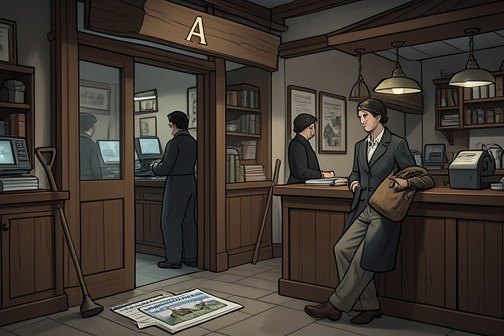
Franklin had surveyed [Andover](entity:location-recall-location-andover-52a179db93b6) and selected [Alice Ascher](entity:character-recall-character-alice-ascher-7c3a05a9a6ed), whose name and shop sign suited the A pattern. He killed her with a weighted stick, leaving the shop’s money untouched and planting the railway guide. For [Bexhill](entity:location-recall-location-4de26abfb0f2), he chose [Betty Barnard](entity:character-recall-character-betty-barnard-7d6599cdfd28) after courting her and used her own belt to strangle her before the announced date.
At [Churston](entity:location-recall-location-churston-82f31899318d), Franklin killed his brother during the familiar evening walk and relied on the A.B.C. panic to divert suspicion from the inheritance motive. The misdirected letter was part of the plan: it delayed police attention until after the murder, a trick that could not have worked with a letter sent to [Scotland Yard](entity:organization-recall-organization-scotland-yard-598725f8a130).
September 11, 1935, as reconstructed by Poirot
The Doncaster Murder Reconstructed
After Sir Carmichael’s death, Franklin needed another killing so that the sequence would not abruptly stop and expose the real motive. He selected Doncaster for the publicized D crime, followed Cust to the cinema, and stabbed George Earlsfield while the film distracted the audience.
Franklin planted the guide and brushed the bloody knife against Cust as they passed in the dark, leaving the weapon and blood on the man he had manipulated. Earlsfield’s death could then be treated as a mistaken attack on Roger Downes, while Cust appeared to have been caught red-handed.
Late 1935, during Poirot’s explanation
The Case Against Franklin
Poirot said that once he suspected Franklin, evidence became accessible: a weighted stick was found concealed at [Combeside](entity:location-recall-location-combeside-693a1bf14775), witnesses identified Franklin near the Doncaster cinema when he was supposed to be at the races, and [Milly Higley](entity:character-recall-character-milly-higley-3ca9ceb9a3e5) and a roadhouse worker recognized him as Betty’s companion. Franklin had also left a fingerprint on [Cust’s typewriter](entity:object-recall-object-cust-fe08841f411d).
The typewriter print was presented as the decisive oversight, though Poirot later admitted to Hastings that he had invented that detail to provoke Franklin. The real force of the case lay in the converging motive, the pattern of visits, and the way Franklin had exploited Cust’s weaknesses.
Late 1935, at the final confrontation
Franklin’s Failed Suicide
When Poirot accused him, Franklin laughed and challenged the evidence, pointing to Cust’s apparent guilt and the bloodied knife. Poirot answered that Cust had admitted the murders but that his character made him incapable of planning them; two people had been involved, the calculating killer and the suggestible false A.B.C.
Franklin suddenly drew an automatic pistol and tried to shoot himself. The weapon only clicked: Poirot’s new manservant had secretly removed its ammunition. [Scotland Yard](entity:organization-recall-organization-scotland-yard-598725f8a130) detectives then arrested Franklin, who had to face the consequences rather than escape through an easy death.
Late 1935, immediately after the arrest
The Fox Is Not Released
After Franklin was taken away, Poirot told the group that the crime was not sporting, especially because Franklin had condemned an innocent and vulnerable man to a living death. The children’s fox rhyme now expressed the cruelty of making Cust believe he was a murderer and exposing him to possible confinement or execution.
Poirot reassured Megan that the nightmare was over. He explained Donald’s dream as grief and guilt giving way to new love: Megan was taking her sister’s place in his heart, and he feared that forgetting Betty would be a betrayal.
After Franklin’s arrest
New Attachments Take Shape
Poirot’s questions had also exposed the emotional changes developing among the survivors. Franklin had once drawn [Thora Grey](entity:character-recall-character-thora-grey-22f2a330cc57) into his orbit, but she had expected to benefit from his inheritance and left when his guilt was exposed. Her ambitions had been one reason Franklin feared that his brother might marry her.
Megan and Donald found comfort in each other after the death of Betty, while [Mary Drower](entity:character-recall-character-mary-drower-4925b3711c93) appeared to have a young man of her own. The case’s personal aftermath reinforced Poirot’s observation that murder had brought otherwise separate lives together, though not always in the way anyone expected.
A few days after the final confrontation
Cust Reclaims His Life
Cust visited Poirot to thank him, awkwardly and at length. A newspaper had offered him money for his story, and Poirot advised him to demand more, recognizing that the man who had been used as a public monster was now famous.
Cust was delighted by the prospect of a paid holiday and a wedding present for [Lily Marbury](entity:character-recall-character-lily-marbury-99b5e056a88e). Poirot also suggested that his headaches might be caused by poor eyesight and recommended an oculist, giving Cust a modest practical hope after the terror and confusion of the case.
At the novel’s ending
Poirot and Hastings Resume the Hunt
After Cust left, Poirot admitted that he had not been modest when accepting praise. He turned to Hastings and recalled that the two friends had once again gone hunting together, their partnership restored by the case.
The ending closed the immediate investigation but preserved the familiar rhythm of Poirot’s life: retirement remained elusive, and the detective was ready to meet another crime. For Hastings, the case had also confirmed how an apparently obvious detail could unlock a carefully concealed design.